Paducah neurologist to bike 150 miles to thank the cancer team that saved his life
FOX23 News at 9 p.m.
PADUCAH, Ky. (KBSI) — A Paducah doctor who has spent years caring for patients is preparing to mark a major milestone in his own cancer journey by biking roughly 150 miles to the Nashville clinic that treated him.
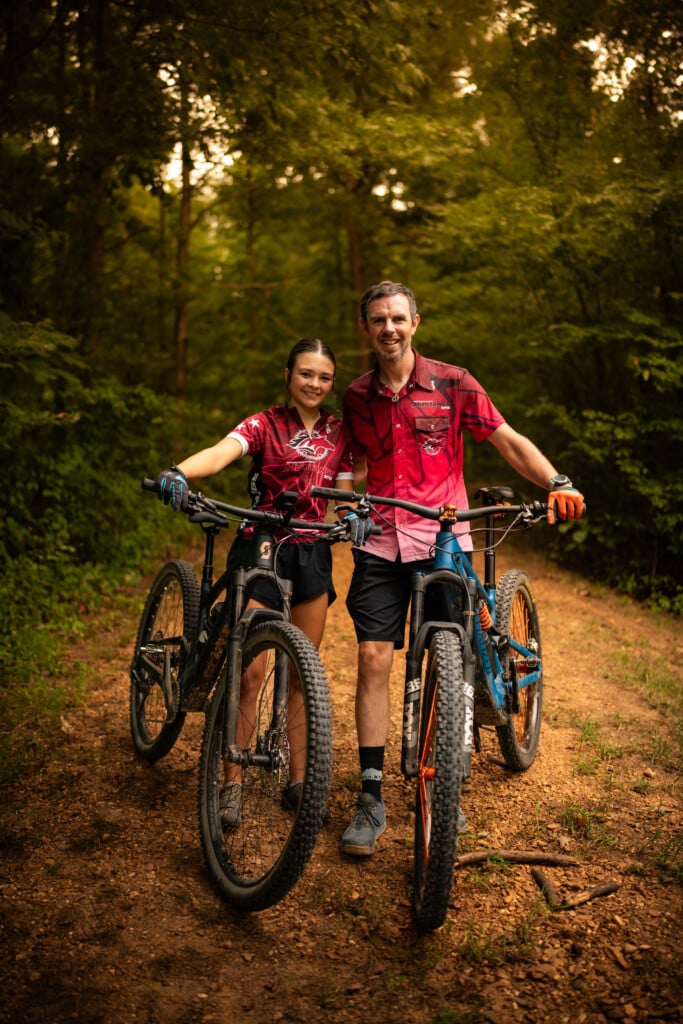
Dr. Joseph Ashburn, a stroke director at Baptist Health Paducah, plans to leave Paducah on Oct. 10 and ride about 50 miles a day over three days before arriving in Nashville for a follow-up appointment Oct. 13.
The ride comes nearly three years after Ashburn was diagnosed with acute myeloid leukemia, or AML — his third cancer diagnosis.
Ashburn first battled cancer as a baby and later developed thyroid cancer. He said treatments from his previous cancers also put him at an increased risk of developing leukemia.
Even knowing that risk, Ashburn said he initially brushed off the warning signs. They first appeared while he was cycling.
“Three years ago, I noticed that in the late spring that my legs would start cramping as I would go up hills, and I just kind of attributed it to that I was a little older and a little more tired, and I worked a lot at the hospital,” Ashburn said.
He said the symptoms continued to worsen, eventually including shortness of breath. During a mountain bike race with his children in Cincinnati, Ashburn began experiencing chest pain and went to a local emergency room.
“We were eventually at a mountain bike race with my kids in Cincinnati, Ohio, and I started having chest pain,” Ashburn said. “And when I had chest pain, I knew something was off. So I went into one of the local ERs there, and they did a blood test and found that I had acute myeloid leukemia, also known as AML.”
Ashburn was airlifted to Sarah Cannon Research Institute in Nashville, where he began treatment.
He underwent six months of chemotherapy followed by two years of targeted therapy through a clinical trial.
Cycling remained part of his life even during treatment.
Ashburn said nurses at the hospital learned to have a stationary bike waiting in his room when he returned for chemotherapy.
“So as an example, I would go for a round of chemo every three weeks,” Ashburn said. “I would check into the hospital, and for a week I would lay in bed while they gave me these different chemo agents. But the nursing staff would look ahead on the schedule and see I was coming, and they would actually wheel a stationary bike in my room.”
Ashburn said he continued working to maintain his strength and endurance, even setting a goal of riding 100 miles for the American Heart Association while undergoing treatment.
“And so even during chemo, I tried to keep my strength up and endurance up just with an exercise bike,” Ashburn said. “And then in February of that year, I talked to my doctor and I said, here’s the deal. I want to do 100 miles for American Heart and Stroke Association.”
His doctor agreed, and Ashburn completed the goal, sometimes riding while still connected to an IV.
Nearly three years later, Ashburn said his tests have continued to come back negative.
“And so when I go back for the three-year mark in a couple of weeks, if it’s negative, I’m considered cured, which means that I have less than a five percent chance of it coming back for the rest of my life,” Ashburn said. “So, pretty exciting milestone. And I just thought, you know what, what a neat way to celebrate that.”
For Ashburn, riding back to the clinic also represents just how much has changed since treatment.
“I can remember so many times where I was out of breath just walking from the elevator to the check-in desk, which is 30 feet,” Ashburn said.
Now, he hopes to arrive at the same clinic after riding about 150 miles.
“To me, it’s just such a neat statement to say at my three-year mark, as opposed to being short of breath on a 30-foot walk, I’m going to ride 150 miles and probably never be short of breath,” Ashburn said. “All because of my research team and my doctor and my family and my support and my faith.”
Ashburn said the ride is also an opportunity to thank the doctors, nurses and researchers who helped care for him.
“And so I hope that what they see in me is just simply gratitude,” Ashburn said. “Thank you for all you do. All the call nights that my doctor takes, all the work that the nursing staff does, all the work that the researching staff does to put new drugs out and to put people like me in a study just to see if we can advance cancer care.”
For Ashburn, cycling has always been tied to family, health and community. He said some of his earliest memories on a bike are with his parents and sister, and that riding still gives him that same sense of freedom.
“When you get on a bike where you feel like a kid again and you feel healthy,” Ashburn said. “It just feels good to be with friends.”
He said western Kentucky also has a strong cycling community, with group rides happening regularly and riders able to join in throughout the week.
Cycling becomes a way to give back
Ashburn’s connection to cycling stretches back long before his leukemia diagnosis.
He began riding with his father in high school and continued through college and medical school.
After coming to Paducah and opening the Stroke Center at Baptist Health, he looked for a way to combine his medical work with his passion for cycling.
“When I came to Paducah and opened the Stroke Center here at Baptist Health, I approached the staff about starting a ride that would benefit stroke victims in the region and also spread awareness of stroke,” Ashburn said.
He worked with BikeWorld and the hospital to launch Spokes for Strokes.
“And so I worked with the local bike shop, BikeWorld, and the hospital and BikeWorld did a joint venture, and we opened a ride called Spokes for Strokes,” Ashburn said. “So we’ve now done that for 15 years and it’s extremely successful. It’s a 65 mile bike ride that actually has the signs and symptoms of stroke spray painted on the route.”
As riders travel through counties across the region, they encounter messages identifying the signs and symptoms of stroke.
Money raised through the ride stays in the community and supports stroke patients through education, equipment and other needs at the hospital.
Ashburn has also spent the past five years coaching the McCracken County Mountain Bike Team.
His daughter was part of the team when he began coaching, and Ashburn said he has worked with students ranging from fifth graders to high school seniors.
This year, his role in the local cycling community expanded again when he became the owner of BikeWorld — the same shop that helped launch Spokes for Strokes 15 years ago.
For Ashburn, cycling now connects several parts of his life: medicine, service, family and his own recovery.
His next ride will bring those pieces together as he returns to Nashville for his three-year follow-up — this time, not struggling through a 30-foot walk, but arriving after roughly 150 miles on a bike.